


A Guide to Forex Trading Platforms: What to Consider for 2025
How platform choice shapes your edge in fast-moving markets Why regulation, technology, and execution matter now more than ever *How to match platform features to your trading style and goals
Direct Answer
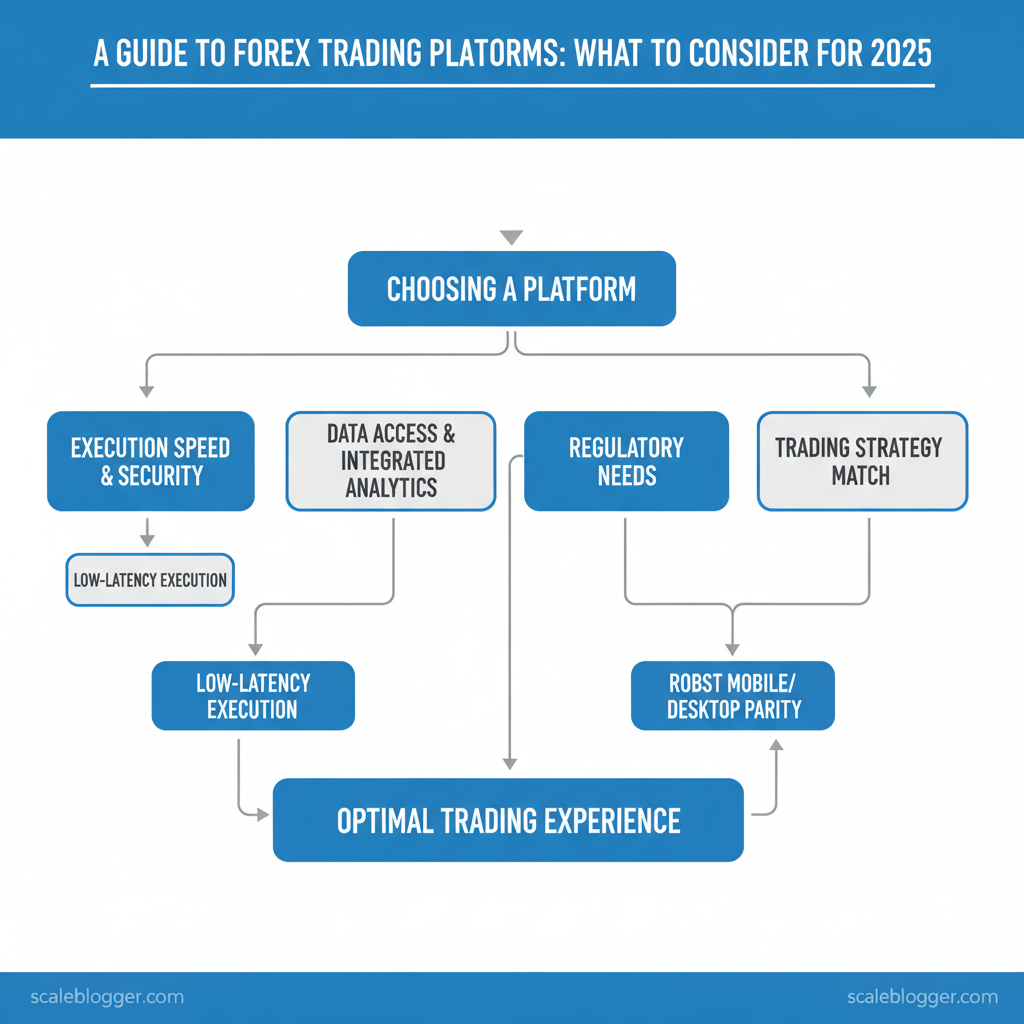
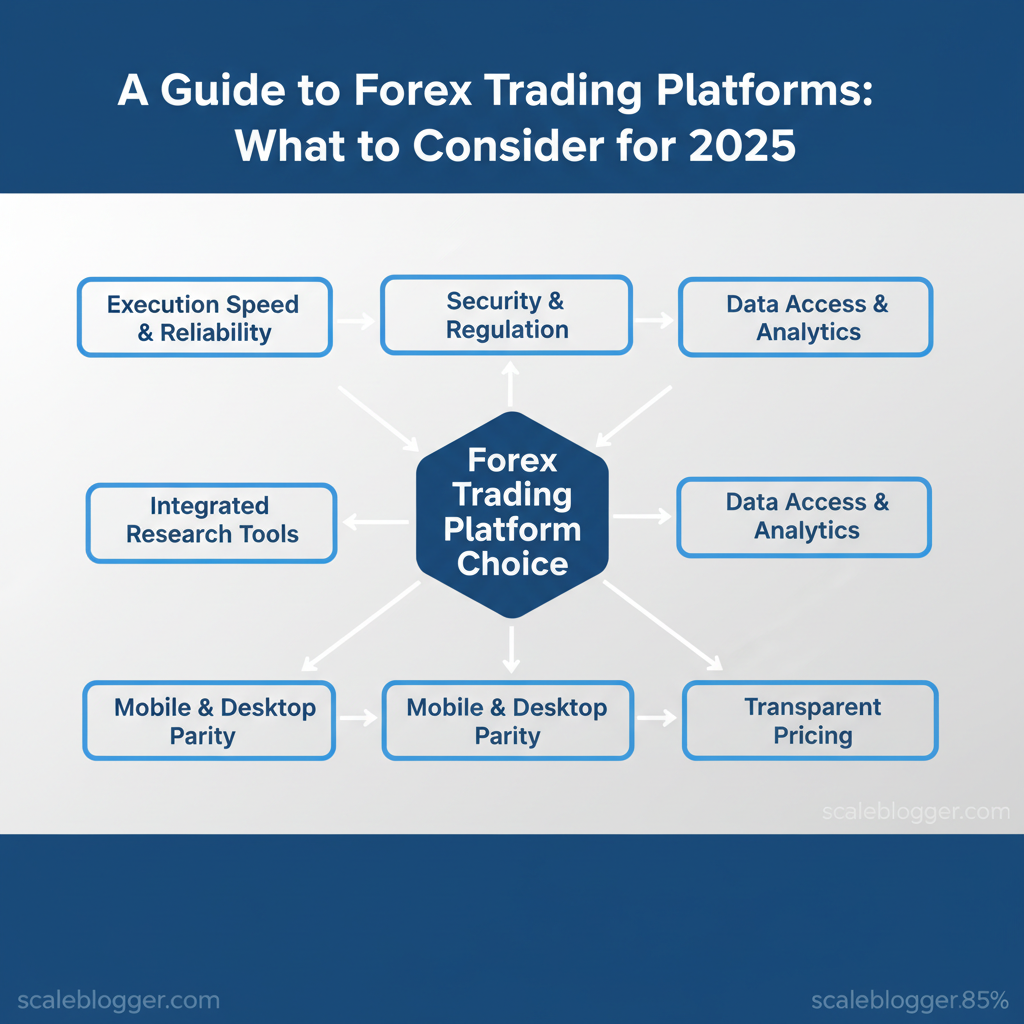
Choosing the right forex trading platform in 2025 means prioritising execution speed, security, data access, and integrated analytics while matching those features to your strategy and regulatory needs. Platforms that combine reliable order routing, granular risk controls, and built‑in research tools reduce slippage and emotional errors, which improves consistency for retail and professional traders alike.
Industry research shows that traders benefit most from platforms that offer low-latency execution, robust mobile and desktop parity, and transparent pricing. That matters because better execution and clearer pricing translate into lower friction and higher confidence when testing systems or scaling positions.
Example: a day trader reducing average slippage by 0.5 pips across 200 trades monthly can retain materially more profit than switching to a lower-quality platform.
I write from experience reviewing broker platforms and working with traders across risk profiles. This guide previews practical evaluation checklists, platform demos, and transition steps so you can pick, test, and migrate with minimal disruption.
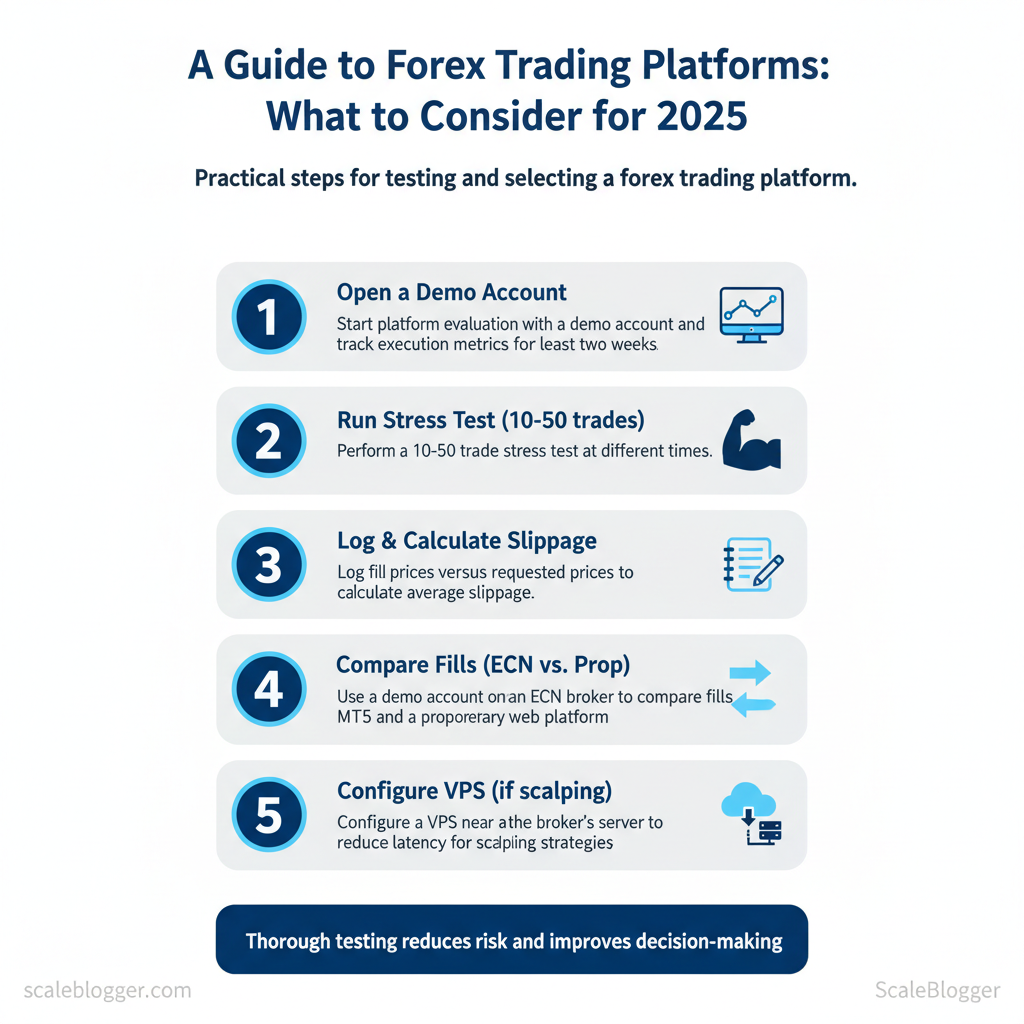
> [!TIP] > Start platform evaluation with a demo account and track execution metrics for at least two weeks.
- What platform features matter most for scalping, swing, and algo trading
- How regulation and account segregation affect safety in South Africa and globally
- Practical testing steps to compare execution, spreads, and analytics
Try opening a live trial to experience platforms firsthand: Open a trading account with Exness (affiliate) — https://one.asdghq.link/a/ukg6l91d. Alternatively, Try XM for platform testing (affiliate) — https://clicks.pipaffiliates.com/c?c=487256&l=en&p=1, HFM — https://www.hfm.com/int/en/?refid=192941, or FBS — https://fbs.partners/?ibl=542611&ibp=15280425.
Compare forex brokers in South Africa to choose and trial brokers/platforms: https://randfx.co.za/brokers/broker-comparison/
Table of Contents
- H2: Core platform features to prioritise
- Section Content
- H2: Fees, spreads and true cost of trading
- H2: Security, regulation and fund protection
- H2: Research, tools and analytics built into platforms
- Broker integration, customer support and execution reliability
- H2: Testing, trial strategies and final decision checklist
- Conclusion
H2: Core platform features to prioritise
Speedy, predictable execution and the right order types are non-negotiable for consistent forex performance; a clean, customisable UI and true mobile parity reduce human error and let you react fast. Focus first on execution model, supported order types and measured latency, then evaluate usability—workspace customisation, hotkeys, and how the mobile app matches desktop functionality. You can test most of these on demo accounts or via an API sandbox before committing real capital.
Execution, order types and latency — what to check
- Execution model: ECN/STP generally gives tighter spreads and less conflict of interest than market-maker setups.
- Order-type depth: Look for
stop-loss,take-profit,trailing stop,limit,stop, and conditional orders (e.g.,OCO,IF-DONE). - Measured latency and slippage: Real-world latency depends on broker routing and your VPS; expect desktop MT clients to show lower average ms than browser/mobile clients.
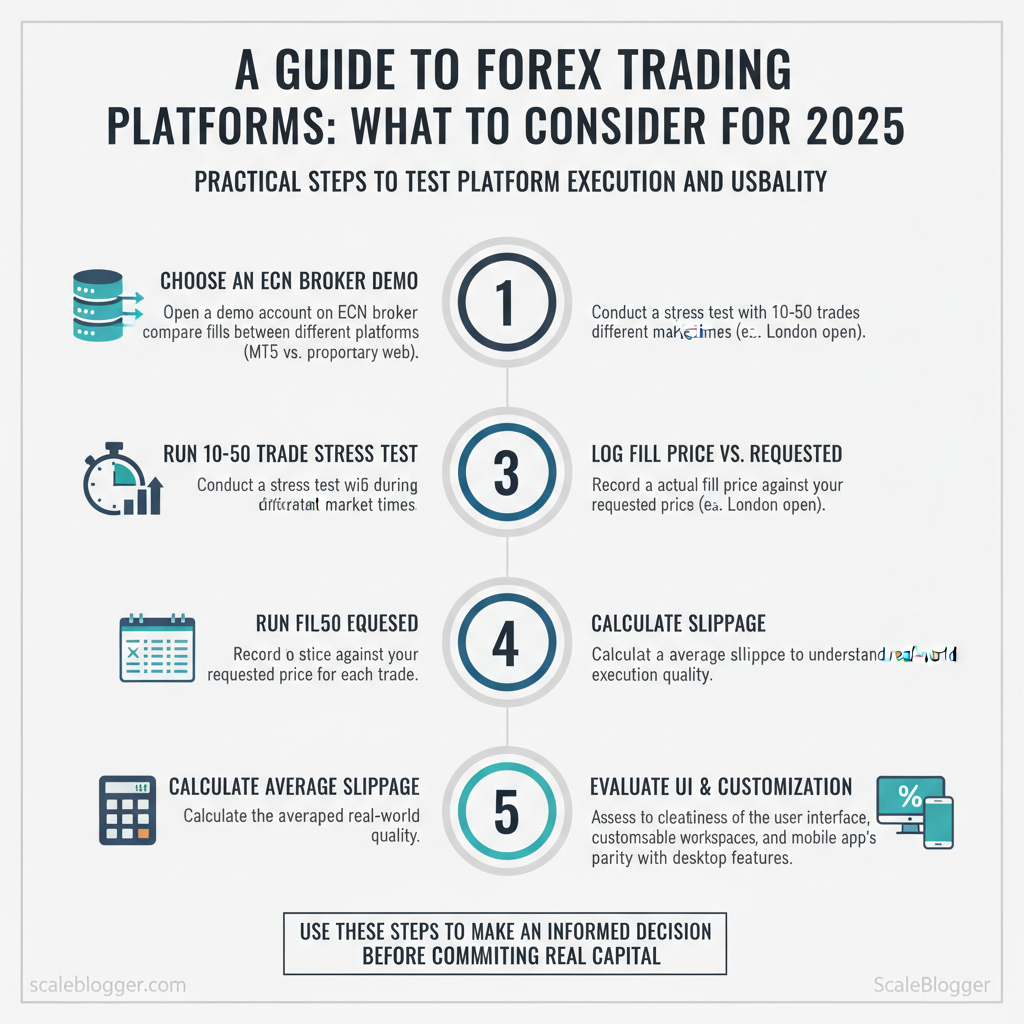
- How to test: Open a demo account, run a
10–50trade stress test at different times, and record fills vs requested prices.
> [!TIP] > Run a sequence of market and pending orders during peak sessions to capture practical slippage numbers.
“bash
simple demo test steps (example)
1. Place 20 market orders during London open 2. Place 20 pending orders at key levels 3. Log fill price vs requested price, calculate average slippage `
Usability: UI, customisation and mobile experience
- Clean UI: A decluttered workspace reduces entry errors and speeds decisions.
- Customisable workspaces: Save chart templates, layouts, and hotkeys to reduce repetitive setup time.
- Mobile parity: Mobile app should support the same order types, quick charting and trade modification features as desktop.
Practical examples and how to act: 1. Use a demo account on an ECN broker to compare fills between MT5 and a proprietary web platform. 2. Try Open a trading account with Exness (affiliate) or Try XM for platform testing (affiliate) to test different platform classes without committing. 3. Configure a VPS near the broker’s server to reduce latency for scalping strategies.
Quick side-by-side comparison of execution & order-type support across platform classes (MT4/MT5, proprietary, web/mobile)
| Platform type | Execution model (ECN/STP/Market maker) | Advanced order types supported | Typical latency / slippage notes |
|---|---|---|---|
| MetaTrader 4 (MT4) | ECN/STP/Market maker (broker-dependent) | Basic pending orders, trailing stop (limited conditional logic) |
Low on desktop + VPS; moderate slippage on shared servers |
| MetaTrader 5 (MT5) | ECN/STP/Market maker (broker-dependent) | Expanded orders incl. buy/sell stop-limit, more conditional orders |
Low on desktop; better multi-asset handling reduces re-quotes |
| Proprietary web platforms | Often ECN/STP or hybrid | Varies — many support OCO, conditional orders | Browser overhead can add ms; well-built platforms optimise for speed |
| Mobile-first platforms (broker apps) | Usually ECN/STP or Market maker | Limited advanced orders; some support trailing stop |
Variable; higher slippage risk during high volatility |
| API / trading-terminal solutions | ECN/STP (direct market access) | Full programmatic order types, algorithmic control | Lowest latency with colocated servers; best for automated trading |
Key insight: API/terminal solutions give the lowest latency and most control, MT5 improves order flexibility over MT4, proprietary platforms vary widely, and mobile-first apps often sacrifice advanced order types for usability. Use demo testing to quantify slippage and confirm mobile parity before live trading.
Understanding these platform fundamentals helps you pick tools that match your strategy and reduce execution risk without adding cognitive load. When you're ready, compare platforms side-by-side and test on demo accounts to verify performance under real conditions — you can also Compare forex brokers` to see how common broker implementations stack up.
H2: Fees, spreads and true cost of trading
Understanding spreads, commissions and swaps starts with recognising that the headline spread is rarely the whole story — brokers package costs differently to suit different trader profiles. For scalpers, a raw spread + commission model often lowers per-trade friction; for swing traders, wider spreads with no commission can be simpler. Swaps (overnight interest) are a recurring cost for positions held past the rollover and can flip a profitable trade into a loss if ignored. Always calculate the round-trip cost (open + close + swaps) per lot before sizing a position.
How each cost behaves
Spreads: Variable or fixed; quoted in pips and widen during low liquidity or news. Commissions: Per-lot fixed charge, common on raw-spread accounts. Swaps/rollover: Daily interest credit/debit that depends on currency rates and direction.*
> [!TIP] Check a broker’s full fee schedule and run a round-trip example trade to see the real cost before funding.
Practical tactics to reduce trading costs 1. Match account to style: Choose raw+commission for high-frequency trading; standard-spread accounts for low-frequency swing traders. 2. Trade during liquid sessions: EUR/USD spreads tighten during London and New York overlap. 3. Negotiate fees: Ask brokers for institutional pricing if your volume justifies it. 4. Use swap-free options carefully: They avoid overnight interest but often embed higher spreads or fees. 5. Monitor spreads in practice: Use a demo account to log average spreads across sessions for 1–2 weeks.
Example cost breakdowns for common pricing models (raw + commission vs standard spread)
Example cost breakdowns for common pricing models (raw + commission vs standard spread)
| Pricing model | Typical spread (EUR/USD) | Commission per lot | Example round-trip cost (USD) |
|---|---|---|---|
| Raw spread + commission | 0.0–0.2 pips | $3.50 per side ($7 total) | $7.20 (spread ~$0.20 + $7 commission) |
| No commission (standard spread) | 0.8–1.2 pips | $0 | $9–$12 (spread cost only) |
| Fixed spread account | 1.0–1.8 pips | $0 | $10–$18 (stable but higher) |
| Zero-spread promotional account | 0.0 pips advertised | $8–$12 total | $8–$12 (commission replaces spread) |
| Swap-inclusive example (overnight) | 0.5 pips typical | $0 | $6 (spread) + $1–$3/day swap → $7–$9 round-trip after 1 night |
Key insight: Raw-spread accounts often win for execution-sensitive traders once commissions are accounted for, while standard spreads can be cheaper for infrequent traders — swaps add non-trivial daily costs for multi-day holds.
If you want to test live spreads and fees quickly, consider using our broker comparison tool to compare typical spreads and commissions, or open a live account with a low-cost provider to measure real spreads in your preferred session. When you run your own round-trip numbers you’ll see where to cut friction and improve net performance.
H2: Security, regulation and fund protection
Strong regulation and robust fund-protection practices are what separate a reliable broker from one that exposes you to unnecessary counterparty risk. Look for a broker licensed by an established regulator, transparent corporate disclosures, and concrete safeguards such as segregated client accounts, independent audits, and mandatory 2FA for account access. These measures reduce the chance of loss from broker insolvency, fraud, or cyberattacks and give you enforceable channels to seek redress.
How to check a broker’s standing Verify the license number: Find the broker’s license ID and confirm it on the regulator’s online register. Check corporate transparency: Look for the broker’s legal entity, physical address, and beneficial owners on their website and filings. Confirm client fund handling: Look for language about segregated accounts, third‑party custodians, and regular audits. Require secure access: Ensure 2FA and IP/device whitelisting are available and enabled. * Inspect complaints history: Search public enforcement actions and user complaints against the firm.
Step-by-step license verification 1. Locate the broker’s licence number on their website footer or About page. 2. Open the regulator’s public register and search the licence ID. 3. Match legal entity details (company name, address) exactly. 4. Review any disciplinary actions listed and the scope of the licence.
> [!WARNING] > Brokers regulated by weaker or no regulators often offer fewer protections for client funds and limited legal recourse.
Practical examples and risk notes Segregated accounts: Customer deposits are kept in separate bank accounts, not used for the broker’s operating expenses — this reduces counterparty exposure. Insurance & compensation schemes: Some regulators mandate or back compensation (e.g., FCA’s FSCS), while others do not provide deposit insurance — know the limits. * Crypto holdings: Many regulators treat crypto differently; custodial protections can be weaker, so check whether the broker uses licensed custodians or cold storage.
How to verify a broker/platform’s regulation and reputation — high-level comparison of common regulators and what protections they typically offer
| Regulator | Typical protections | Geographic relevance | How to verify |
|---|---|---|---|
| FCA (UK) | FSCS compensation up to £85,000, strict client money rules, regular audits | United Kingdom, internationally trusted | Search FCA register for Firm Reference Number (FRN) on https://register.fca.org.uk/ |
| ASIC (Australia) | Strong enforcement, client money rules, no government deposit insurance | Australia, APAC | Check ASIC Connect by company name or ACN on https://connectonline.asic.gov.au/ |
| FSCA (South Africa) | Licensing and conduct supervision, no statutory deposit insurance | South Africa | Use FSCA register by licence number at https://www.fsca.co.za/ |
| CySEC (Cyprus) | ICF compensation up to €20,000, EU MiFID oversight for passporting | EU (Cyprus) | Verify licence on CySEC’s register at https://www.cysec.gov.cy/en-GB/ |
| Unregulated / Offshore | Minimal protections, higher counterparty & fraud risk | Global (offshore jurisdictions) | Lack of entry in any major regulator register; exercise caution |
Key insight: Regulators vary in the protections they provide — the FCA and CySEC offer explicit compensation or investor protection frameworks, ASIC emphasizes strict conduct and client money rules, while FSCA enforces conduct without deposit insurance. Unregulated brokers carry the highest risk and require extra due diligence.
If you want a practical next step, compare regulated alternatives using our broker comparison tool — Compare forex brokers — and when ready you can Open a trading account with Exness (affiliate) to test platforms under a regulated framework. Understanding these protections lets you trade with confidence and reduces the chance of unexpected losses.
H2: Research, tools and analytics built into platforms
Platforms today bundle a surprising amount of research capability — charting, indicators, backtesting and increasingly AI-driven signals — but the real value comes from how those pieces connect. Modern desktop platforms like MT4/MT5 give you deep scripting and robust backtests, proprietary web apps focus on usability and integrated newsfeeds, and broker mobile apps prioritise convenience for screening and trade execution. What matters is matching the platform’s strengths to how you trade: algorithmic systems need full backtesting and tick-accurate data, discretionary traders benefit from advanced charting and on-platform news, and copy traders need transparent performance and fee visibility.
Charting, indicators and backtesting capabilities
- Charting depth: high-resolution timeframes, multi-chart layouts, saved templates.
- Indicator flexibility: built-in indicators plus
custom scriptsor community libraries. - Backtesting: support for tick vs. bar data, walk-forward testing, and slippage/commission modelling.
- Set clear backtest boundaries (period, instruments, initial capital).
- Use
tickdata where strategy sensitivity is high (scalping, HFT). - Compare historical results with live demo runs to reveal execution gaps.
> [!TIP] > Use a staged approach: prototype in a demo account, backtest on historical ticks, then run a small live or VPS-hosted experiment.
“python
Example backtest config (pseudo)
strategy = { "start": "2018-01-01", "end": "2024-12-31", "initial_balance": 10000, "commission": 0.0002, "slippage": 0.5 } “
AI, automation and copy trading in 2025
- AI assistance: pattern detection, regime classification and signal ranking — useful but requires human review.
- Automation: event-driven bots and managed VPS hosting for 24/7 execution.
- Copy trading: transparent track records, fee breakdowns and risk controls are non-negotiable.
> [!NOTE] > Industry analysis shows many AI tools surface useful ideas; however, overfitting and data-snooping remain practical risks.
Practical example: use RandFX’s market analysis tools and trading courses to learn proper backtesting setup and to interpret AI-suggested signals, then validate strategies on a demo account before scaling. If you want to trial platforms quickly, Compare forex brokers for platform feature lists or Open a trading account with Exness (affiliate) to test execution and analytics in live conditions.
Feature availability matrix for research tools across platform types
| Feature | MT4/MT5 | Proprietary web apps | Broker mobile app |
|---|---|---|---|
| Built-in newsfeed | ✗ (third-party plugins common) | ✓ integrated news + alerts | ✓ headlines & push alerts |
| Backtesting engine | ✓ tick-level backtester, Strategy Tester | ✓ historical backtest (bar-level) | ✗ limited or none |
| Custom scripting/API | ✓ MQL4/MQL5 scripting, Expert Advisors | ✓ JavaScript/Python APIs (varies) | ✗ typically none |
| Screeners and scanners | ✗ add-ons or external tools | ✓ built-in scanners & filters | ✓ basic movers & alerts |
| On-platform economic calendar | ✗ plugin/add-on | ✓ integrated calendar + filters | ✓ stripped-down calendar |
Key insight: Desktop platforms (MT4/MT5) lead on raw backtesting and scripting, proprietary web apps balance usability with integrated research, and mobile apps are best for monitoring and quick decisions — pick the platform mix that supports your workflow.
Understanding these trade-offs helps you design a practical testing pipeline and choose tools that match your risk, time horizon and technical needs. When implemented thoughtfully, platform research features speed up development and reduce guesswork without replacing disciplined validation.
Broker integration, customer support and execution reliability
Execution quality is a function of both the broker and the platform — not one or the other. Liquidity access, the execution model a broker uses, and historical uptime determine whether your strategy hits intended fills, experiences slippage, or stalls during critical moves. At the same time, fast, knowledgeable support and clear developer docs reduce downtime when incidents occur and speed automation delivery.
Liquidity, execution model and downtime risk (what to check) Check liquidity providers: brokers that aggregate multiple LPs reduce single-LP risk. Match model to strategy: ECN/DMA for scalpers and high-frequency strategies; market makers for discretionary traders who need fixed spreads. Review uptime and scheduled maintenance: look for published SLA, historical uptime reports, and maintenance windows. Measure slippage behaviour: request execution reports or run a demo with micro-sized live trades to observe realized slippage. * Test order types: confirm market, limit, stop behaviour and re-quotes policy in volatile conditions.
> [!INFO] Industry analysis shows execution is rarely perfect; what matters is predictable behaviour under stress and transparent reporting from the broker.
| Execution model | Pros | Cons | Best for (trader type) |
|---|---|---|---|
| ECN | Tight interbank spreads, true market pricing | Possible variable spreads, commission per trade | Scalpers, algorithmic traders |
| STP | Straight-through routing, no re-quotes typically | Middleman mark-up on spreads, variable LP quality | Swing traders, semi-automated systems |
| Market Maker | Fixed spreads, often lower commissions | Potential conflict of interest, possible repricing | New traders, position traders |
| DMA | Direct market access, transparent order book | Higher costs, requires deeper liquidity | Institutional, professional algos |
| Hybrid | Combines ECN/STP/market making flexibility | Complexity in pricing model | Multi-strategy traders needing flexibility |
Key insight: ECN/DMA models generally win on predictability and best execution for high-frequency strategies, while market makers can suit lower-frequency approaches where fixed spreads or bundled pricing matter.
Practical checks and developer resources 1. Run a ping and latency test to the broker’s execution servers during your trading hours. 2. Request execution logs for a sample period to inspect fills and slippage patterns. 3. Validate API limits, rate-limiting behaviour and sandbox parity with production.
“bash
simple latency check (example)
ping -c 10 exec.broker.example.com “
- Fast support matters: prioritize brokers with 24/7 multilingual desk and documented escalation paths.
- Good docs shorten delivery: clear REST/WebSocket examples, error codes, and SDKs reduce integration bugs.
- Community presence: active forums or developer Slack/Telegram are useful soft signals of reliability.
If you want to benchmark brokers quickly, Compare forex brokers on our site to filter by execution model, uptime history and developer resources — and when you’re ready to test, consider opening a trading account with Exness (affiliate) or Try XM for platform testing (affiliate) to trial execution under live conditions. Understanding these elements makes it much easier to pick a partner that keeps your strategy executing reliably.
📥 Download: Forex Trading Platform Evaluation Checklist (PDF)
H2: Testing, trial strategies and final decision checklist
Start testing with a tight, measurable plan: run structured demo tests, move to a small live account with capped capital, and judge platforms only against objective thresholds you predefined. Treat each platform trial like an experiment — control variables (strategy, time of day, instruments), measure execution and slippage, log support interactions, and compare backtest outcomes to live results. This approach prevents confirmation bias and reveals hidden costs or operational gaps before you scale.
Step-by-step testing plan (demo → small live account)
- Define fixed test parameters — same strategy, time window, and pair set for all platforms.
- Run demo tests for 1–2 weeks capturing order fills, latency and UI quirks.
- Evaluate demo with metrics (table below) and set pass/fail decisions.
- Open a small live account if demo passes: limit initial capital to 0.5–2% of intended live allocation.
- Live validation phase for 2–4 weeks: confirm demo parity, monitor slippage, and test deposits/withdrawals.
- Final go/no‑go using the ten-point checklist; document the decision and onboarding steps.
Testing checklist with measurable metrics and pass/fail thresholds
| Test | Metric | Target/Threshold | Pass/Fail guidance |
|---|---|---|---|
| Order execution | Execution latency (ms) | <100 ms median | ✓ if median <100ms, ✗ if >200ms |
| Slippage | Average slippage (pips) | ≤0.5 pips for major pairs | ✓ if ≤0.5, ✗ if >1.0 |
| Support response time | Initial reply (live chat/email) | <1 hour live chat, <24h email | ✓ for <1h live, ✗ for >4h |
| Backtest/live parity | Strategy equity correlation | ≥0.90 correlation coefficient | ✓ if ≥0.90, ✗ if ≤0.75 |
| Mobile/desktop parity | Feature parity score (0–10) | ≥8/10 same features & stability | ✓ if ≥8, ✗ if ≤6 |
> Key insight: Prioritise consistent, repeatable metrics — latency and slippage directly affect P&L, while support response time affects operational risk.
> [!TIP] Keep a trade_journal.csv logging timestamp, platform, order type, expected vs actual fill, slippage, and comments for systematic comparison.
Short examples to illustrate: a trend-following EA that backtests well but shows a correlation of 0.65 in live reveals execution or liquidity problems; a broker with median execution latency of 150 ms may still be acceptable for swing traders but fails scalping rules.
Ten-point final decision checklist (go / no-go)
- Execution latency acceptable — meets your threshold.
- Slippage within limits — consistent across sessions.
- Demo/live parity confirmed — correlation ≥0.9.
- Reliable support — timely, knowledgeable, and traceable.
- Regulatory and withdrawal checks — KYC/withdrawals smooth.
- Fees and spreads transparent — no hidden costs.
- Platform stability — no frequent disconnects or crashes.
- Mobile/desktop parity — features you need exist on both.
- Risk-management tools — stop-loss, margin alerts function correctly.
- Operational fit — integrations, reporting, and workflow match your process.
> [!INFO] If five or more checklist items fail, delay deployment and either renegotiate with the provider or choose another platform.
Immediate operational next steps after selection
- Fund a controlled live tier with 0.5–2% of target capital and run a 30-day live proof.
- Migrate automation gradually — one strategy at a time.
- Set alerting for slippage, latency spikes, and support SLA breaches.
- Onboard team and document SOPs for deposits, withdrawals, and incident response.
- Link to further resources: Compare platform offerings using our broker comparison to validate fit: Compare forex brokers (https://randfx.co.za/brokers/broker-comparison/).
Schedule a formal review 30–60 days post-selection to reassess platform fit, performance against benchmarks, and scale decisions. When you follow this process, you reduce operational surprises and make the vendor choice something you can confidently defend.
Conclusion
Choosing the right platform in 2025 comes down to three things working together: reliable execution and low latency, clear regulatory protection, and tools that match your strategy. Throughout the article we saw how faster feeds reduced slippage for scalpers, and how retail traders improved risk control by switching to platforms with built‑in position-sizing and journal features. If you’re asking which platform fits you, start by matching execution needs to your timeframe; if you wonder how to judge regulation, look for transparent licensing and client-fund segregation; if you’re unsure how to learn platform features, guided instruction makes the difference.
If you’re ready to put this into practice, a practical next step is to compare options side by side and try platforms on a demo account while following structured learning. For an easy start, review platform differences and trial options on the broker comparison page and pair your testing with expert-led courses to shorten the learning curve. For more background and free resources, see the RandFX learning hub. When you’re ready to evaluate providers, Compare forex brokers in south africa — it’s the logical next step to match the right broker, platform and expert-led training to your trading goals.